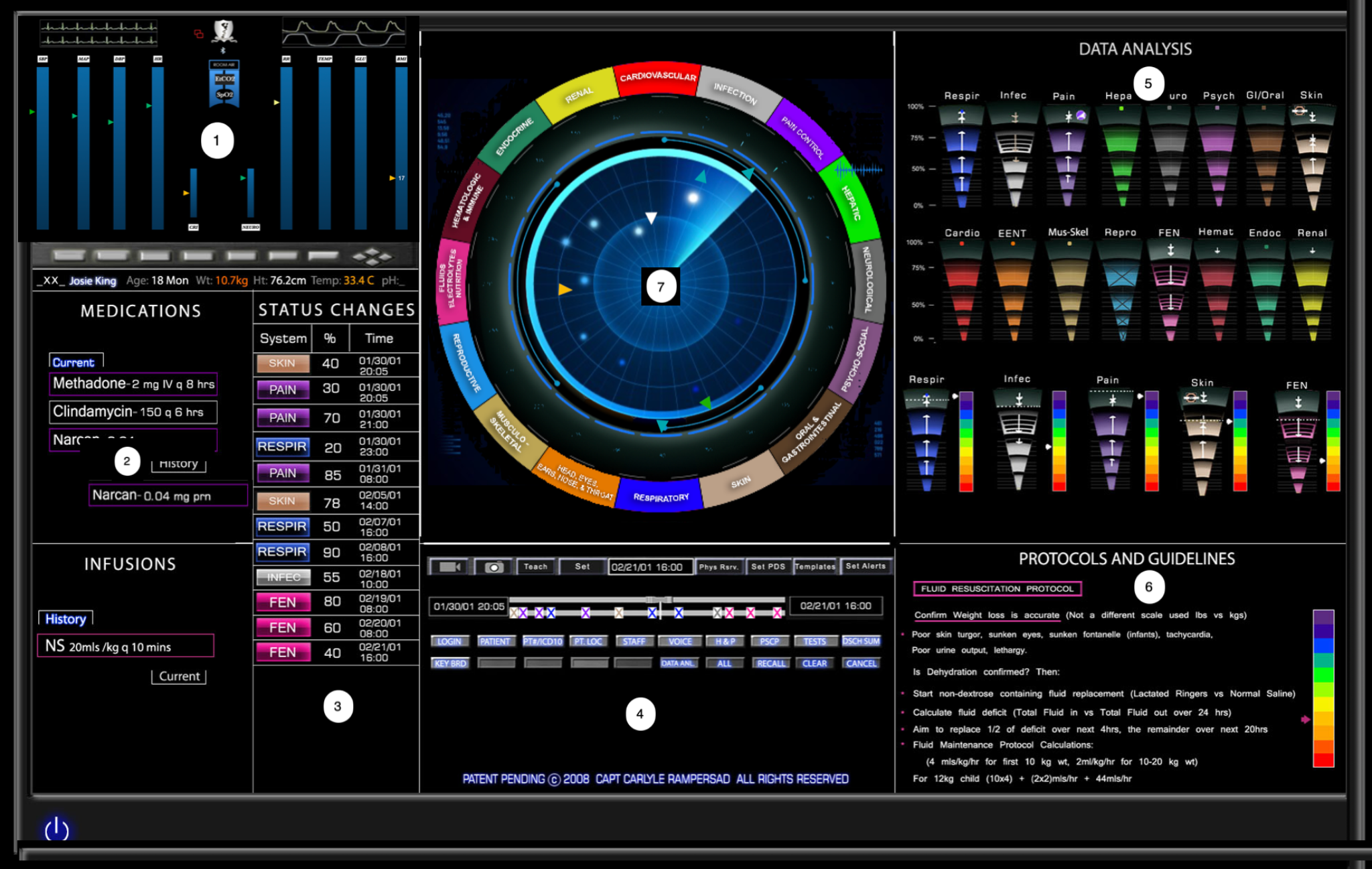
Understanding the Patient Monitoring Overview module
This module presents a multi-system health overview using a circular radar display that maps patient status across cardiovascular, respiratory, renal, neurological, endocrine, and other organ systems. The central severity score provides a quick-glance risk assessment, while color-coded indicators and directional markers show which systems are stable, improving, or deteriorating. Vital signs including heart rate, oxygen saturation, temperature, and other physiological parameters are displayed in real time alongside patient demographics and key metrics.
Why it matters clinically
In critical care, the ability to rapidly assess overall patient condition is essential. When information is spread across multiple monitors and systems, clinicians must mentally integrate dozens of data points under time pressure. This unified view reduces the cognitive effort required to form a complete clinical picture, enabling faster identification of concerning trends and more confident prioritization of interventions.
How AI could assist
An embedded AI advisor in this module helps clinicians interpret the overall patient picture by summarizing current status, identifying which systems may require attention, and explaining patterns across multiple data points. It supports awareness of deterioration signals, system interactions, and changes from baseline — without making diagnostic conclusions.
Important: This system supports clinical decision-making and does not replace physician judgment. All AI-generated insights should be validated by qualified medical professionals.
Example Clinician Questions
Value when connected to EMR and real-time data
When connected to real-time vital sign monitors, EMR data, laboratory feeds, and nursing assessments, this module becomes a continuously updated clinical intelligence surface. It can correlate physiological changes with interventions, flag emerging patterns before they become critical, and provide context-aware alerts that reduce alarm fatigue while maintaining safety.
Help us improve this module
We are actively seeking feedback from clinical practitioners to shape the future of this platform.