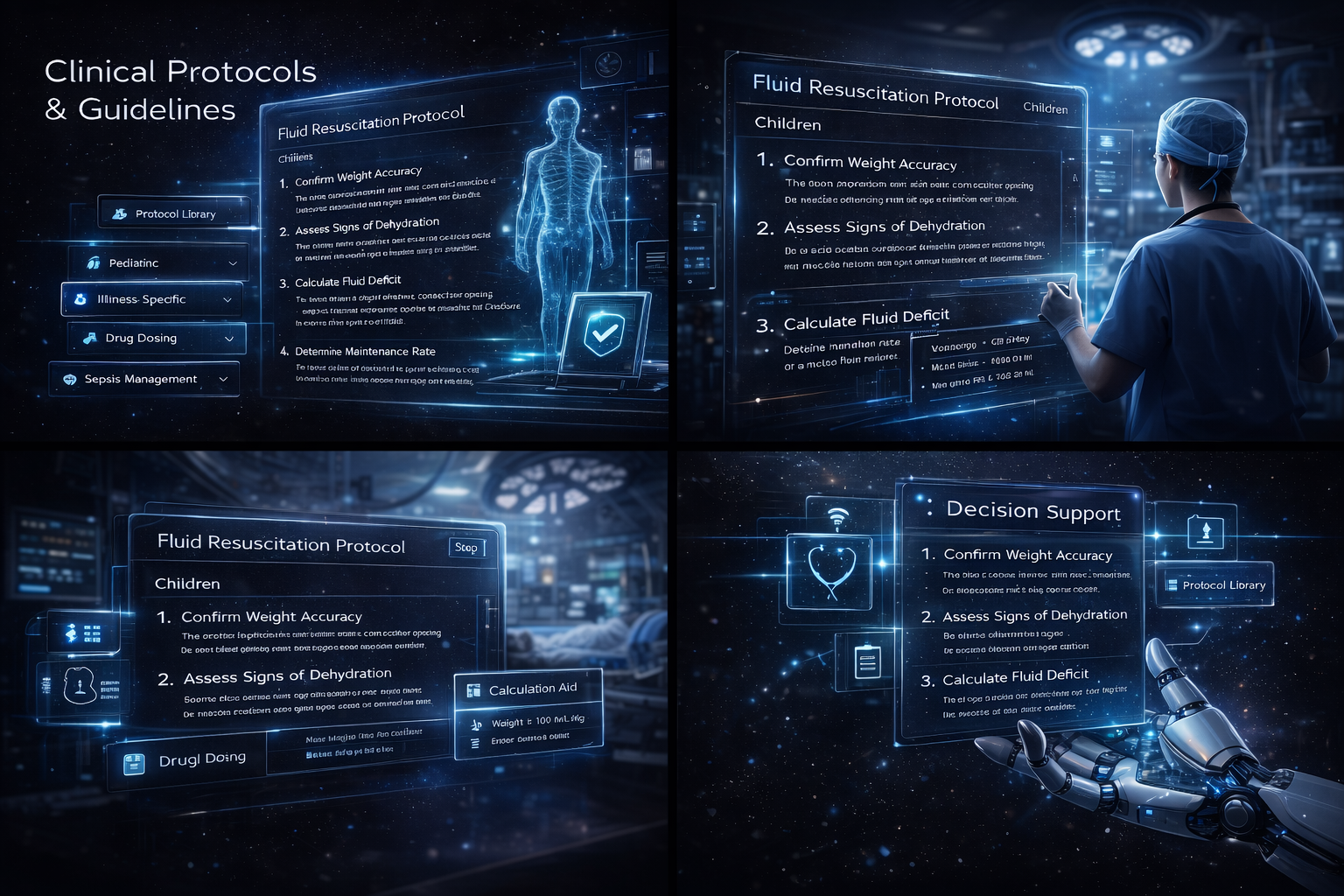
Understanding the Protocols & Guidelines module
This module displays relevant clinical protocols directly within the dashboard context. For example, the fluid resuscitation protocol provides step-by-step guidance including confirming weight accuracy, assessing dehydration signs, calculating fluid deficits, and determining maintenance rates. Protocols are presented with clear decision points, calculation aids, and contextual information that helps clinicians follow established best practices without leaving the patient monitoring interface.
Why it matters clinically
Clinical protocols exist to standardize care and reduce variability in treatment decisions. However, in high-pressure environments, protocols are often stored in separate systems, printed references, or institutional knowledge — making them difficult to access when they are needed most. By embedding protocol guidance directly into the clinical workflow, this module supports consistent adherence to evidence-based practices and reduces the cognitive effort required to recall and apply complex treatment algorithms.
How AI could assist
The AI advisor in this module focuses on clarifying protocol steps, explaining the purpose of each step, and connecting protocols to general clinical scenarios. It frames responses as typical protocol guidance or general clinical practice, helping clinicians understand the reasoning behind each recommendation without directing specific clinical actions.
Important: This system supports clinical decision-making and does not replace physician judgment. All AI-generated insights should be validated by qualified medical professionals.
Example Clinician Questions
Value when connected to EMR and real-time data
When connected to institutional protocol libraries, clinical practice guidelines, and patient-specific data, this module could automatically surface the most relevant protocols based on the current clinical context. Integration with order entry systems would enable protocol-guided ordering, reducing the gap between guideline knowledge and clinical action.
Help us improve this module
We are actively seeking feedback from clinical practitioners to shape the future of this platform.